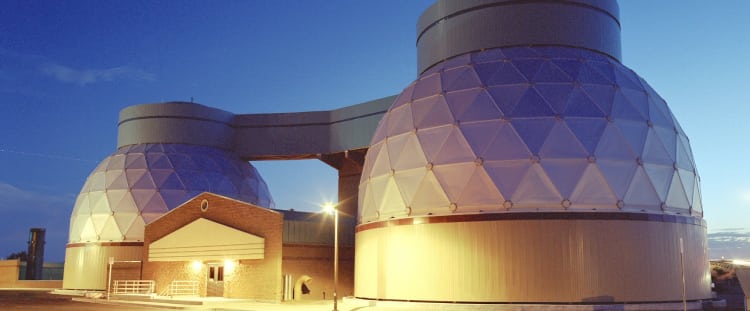
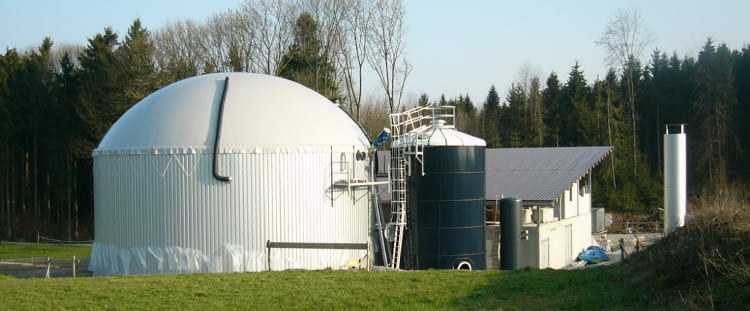
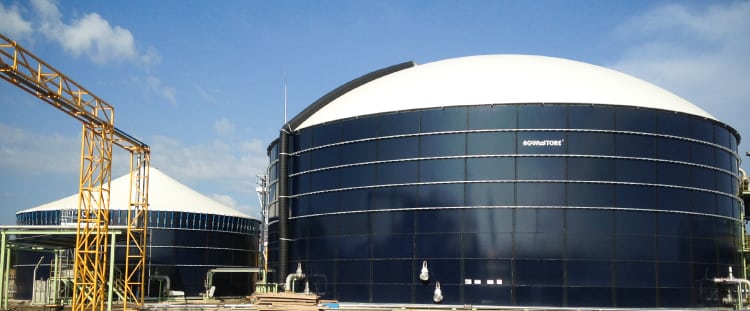
CST has the most comprehensive line of roof and cover options for BioEnergy applications.
Overview
Multiple Tank Cover Options
BioEnergy storage solutions include the industry’s best cover options for digester applications. The gas zone of a digester is the most corrosive area and requires appropriate design.
Along with this corrosiveness, there are many other factors (environmental, mixer loads, pressure, vacuums, ancillary equipment loads, etc.) that need to be considered in cover selection. CST can design and engineer the right solution from the multiple cover types in its portfolio.
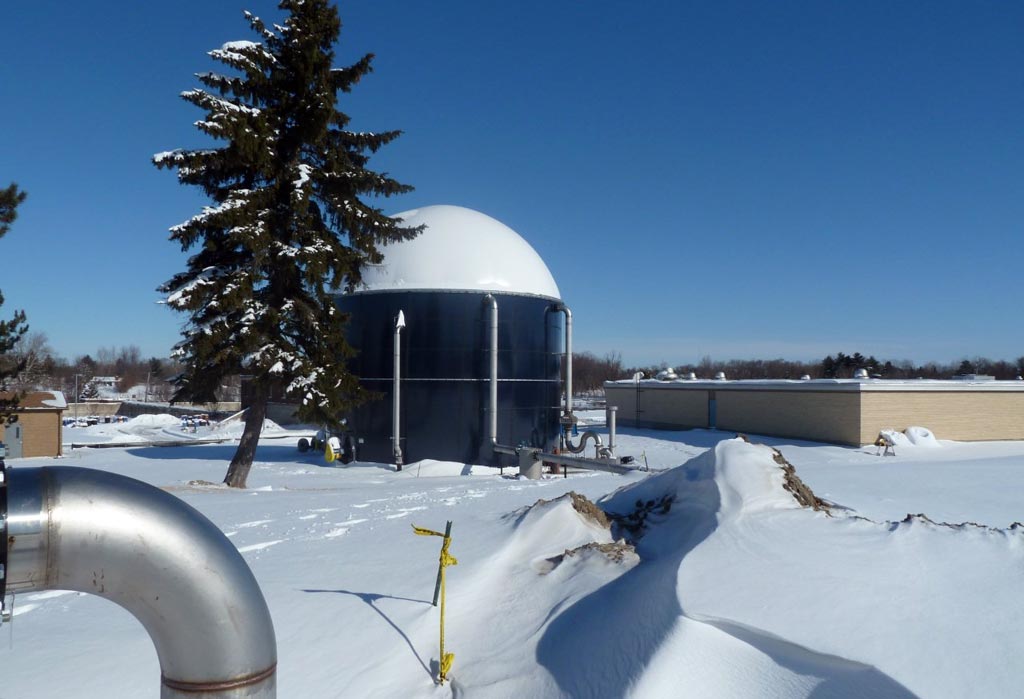
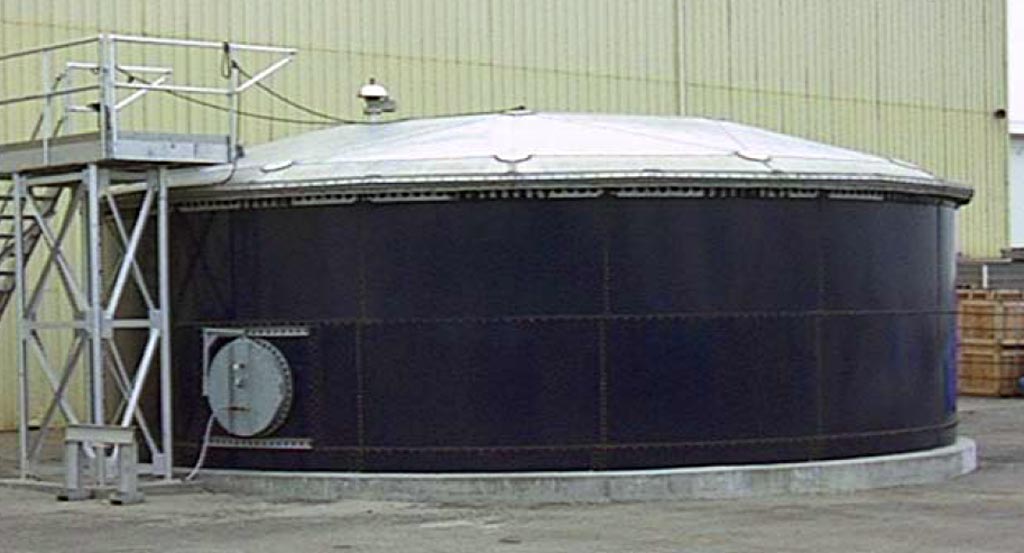
Externally Supported Roof:
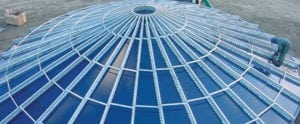 The most common roof design in the industry with a smooth internal roof surface and no rafters. Used when moderate to high pressure or vacuum design limits are anticipated. It is also preferred when there are heavy load conditions expected from mixers and/or other ancillary equipment is installed in the cover.
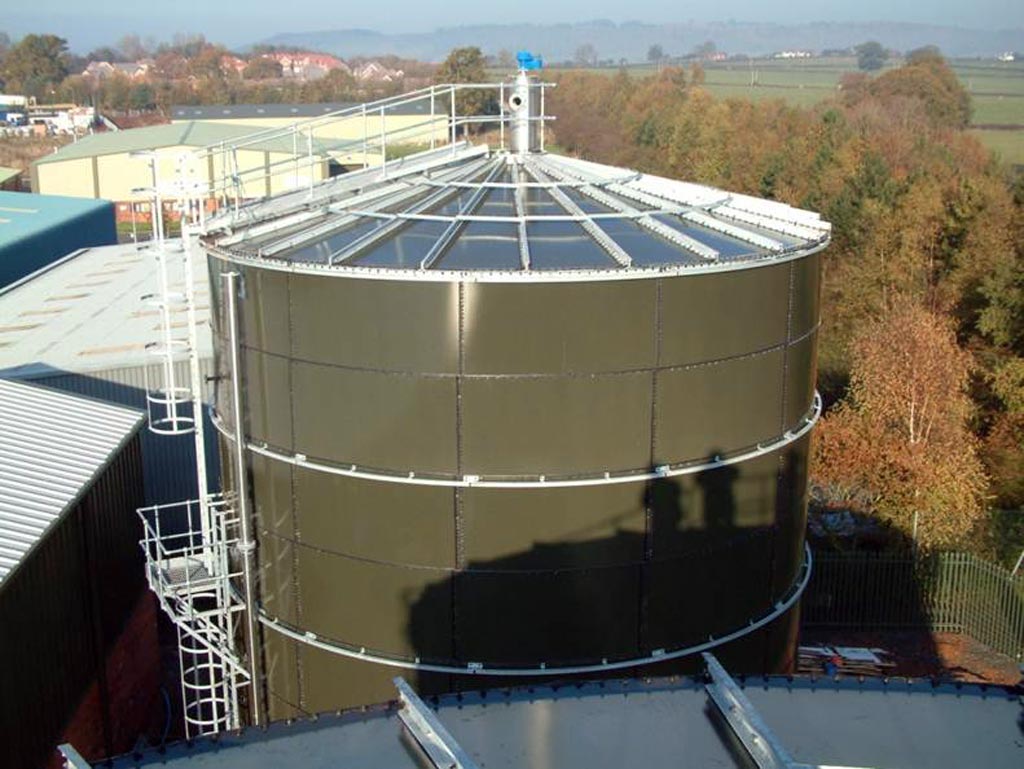
Knuckle Roof:
A n option for smaller diameter storage tanks, a knuckle roof is best suited for lighter pressure and vacuum applications with no load bearing requirements. Fabricated from stainless steel to provide excellent gas zone longevity.
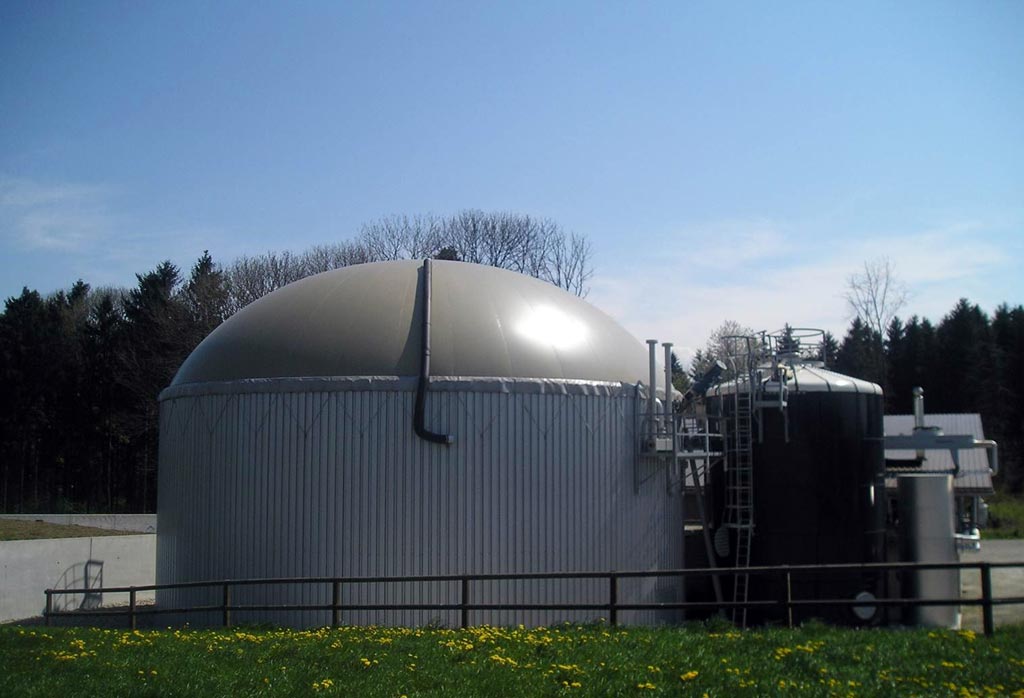
Dual Membrane Covers:
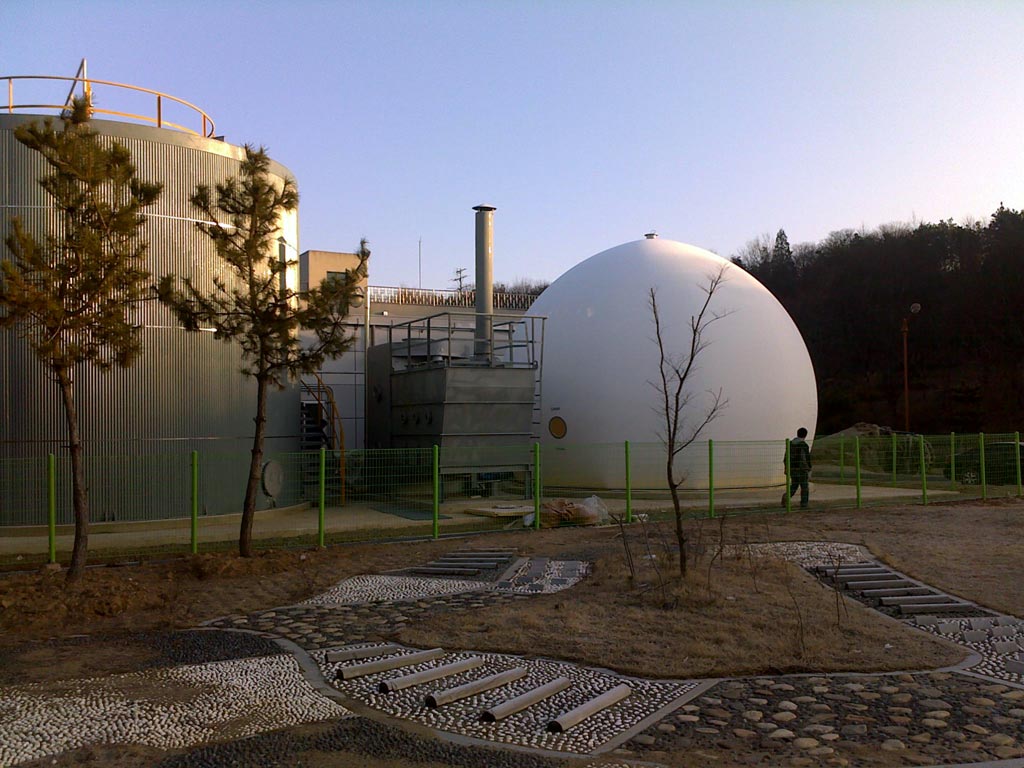
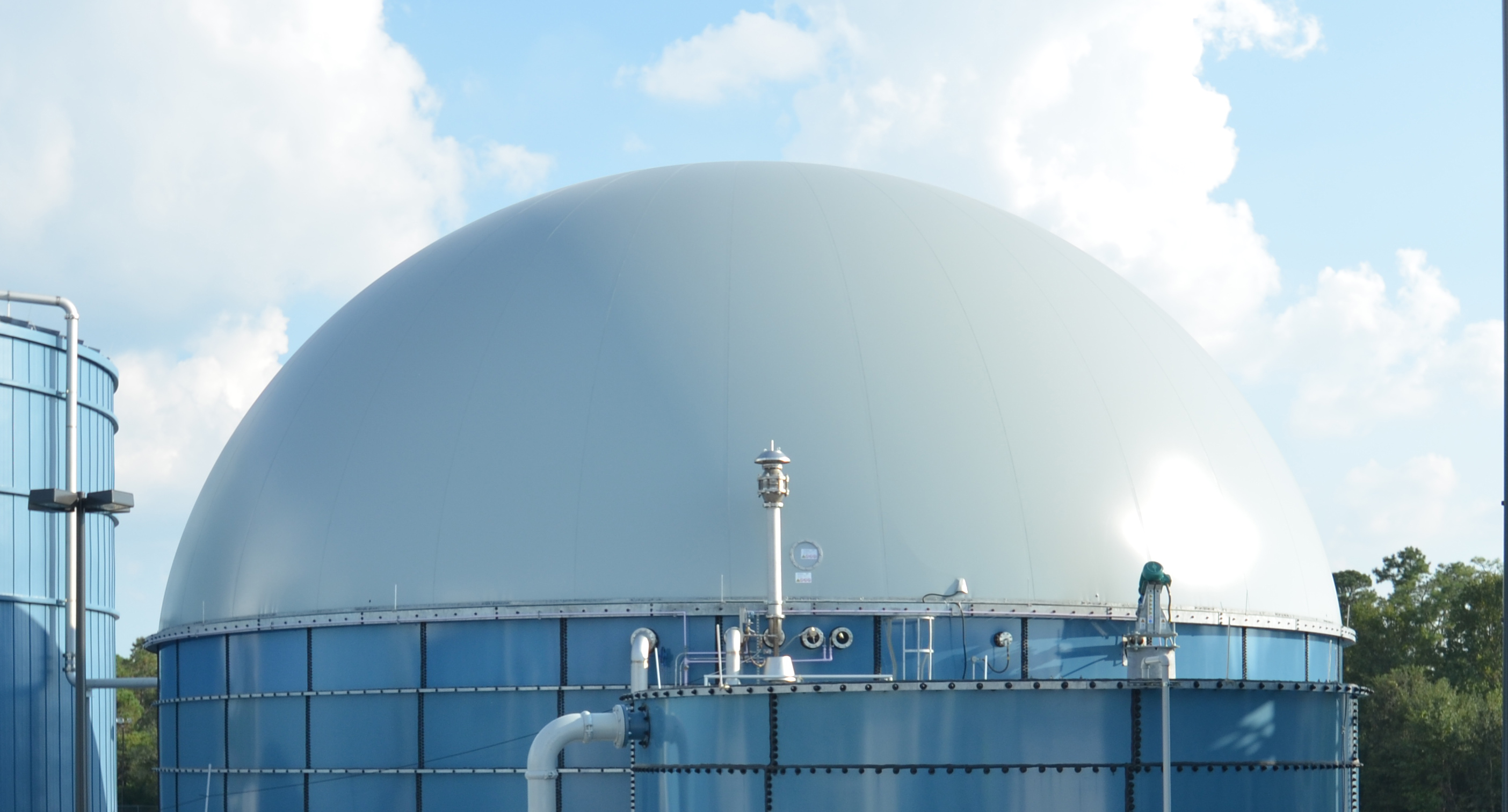
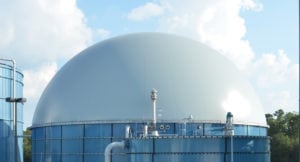 Designed to operate in applications with low to moderate gas pressures where there is not a design requirement for a fixed steel or aluminum cover. Multiple layers and optional center support structures are utilized depending on design considerations.
Membrane Gas Holders:
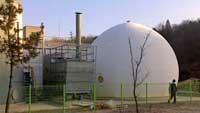 CST can provide membrane gas holder that are commonly used in conjunction with other storage vessels to store and regulate gas form the process and send it to the generating set or flare device.
Applications
Digesters
CST provides the widest range of cover options available that will meet pressure ranges from 2″ of vacuum pressure to 24″ of positive pressure and handle loads from prop mixers and other equipment.
Biofuel Storage and Processing
CST provides roofs coated with our proprietary epoxy system, glass-fused-to-steel porcelain enamel, stainless steel and other alloys. Whatever your biofuel storage design, we can provide the right roof and cover solution.
Biogas Storage
We have the storage options you need for biogas. CST provides secure steel roofs and membrane gas holders depending on your process design and specifications.
Biomass Storage
We provide multiple roof designs that can be utilized on bolted steel, welded steel,concrete and other types of Biomass storage silos and tanks designs.
Resources
Brochures
Success Stories
Photos
Featured Projects
-
Dry Bulk & Liquid Storage Tanks
-
Architectural Covers
-
Aluminum Domes, Reservoir & Flat Covers
-
Grain Tanks Help Whiskey Flow at Jack Daniels
In a world that moves too fast, it’s nice to know some people don’t believe in shortcuts. That’s the spirit behind Jack Daniel’s, America’s oldest registered distillery. Founded in 1866, Jack Daniel’s is an iconic brand that’s synonymous with whiskey. From its modest beginnings, it has grown into a global brand that is available in […]
-

CST’s Solution for the Francis A. Gregory Library – Aluminum over Steel
Situated in Fort Davis Park where a Civil War fort once stood, this iconic 25,500-square-foot structure is an elegant yet accessible gathering place for local residents – a re-imagining of what a library can be. The new Francis Gregory Library is stunning, beguiling, welcoming, and complements its leafy surroundings.
-
An Innovative Cover Solution Extends Reservoir Life
Styles come and go, and sometimes reappear. Take hats, for example. What’s fashionable in the 60s went out in the 70s but may come back a few decades later. However, when it comes to municipal water facilities, yesterday’s model is gone for good, replaced by a more contemporary, sustainable design.
-
Point Lisas, Trinidad Receives 2 State-Of-The-Art Glass-Fused-To-Steel Water Storage Tanks as Part of Nation’s First Water Recycling Project for Water Provision
Read Latest Case Study Here – Point Lisas, Trinidad Receives Two State-Of-The-Art Glass-Fused-To-Steel Water Storage Tanks
-

Above the Big Top: CST and Bell County, Texas Put on a Blockbuster of a Show
Even when the lead actor gets sick, the show must go on. Not only is that true in show business, but it’s also true with big entertainment venues. Keeping the lights on and the seats filled during an extended period of repairs is a testament to collaboration and intelligent design, and that’s the spirit behind […]
-
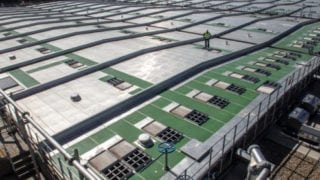
Odor Under Cover: A Solution for the Largest Wastewater Treatment Plant in Europe
Beckton Sewage Treatment Works is one of five wastewater treatment plants in the Thames Water network in the United Kingdom and the largest treatment plant in Europe. Headquartered in the London borough of Newham, it serves 3.7 million people, mainly in north and east London. As part of a $309 million upgrade to the Beckton […]